The Asterousia sit lower than Ida or the White Mountains, yet they retain the rawness and hidden grandeur of the southern ranges: steep slopes, caves, low phrygana vegetation and rare water points that become oases. The fauna includes many raptors — vultures and eagles nest and dominate the scene — giving the landscape a sense of wild sensitivity: when the birds rise, the sky quite literally darkens. The routes reveal old paved ascents and descents, ruined mills and spots with panoramic views over the Libyan Sea.
- The Amba Waterfall
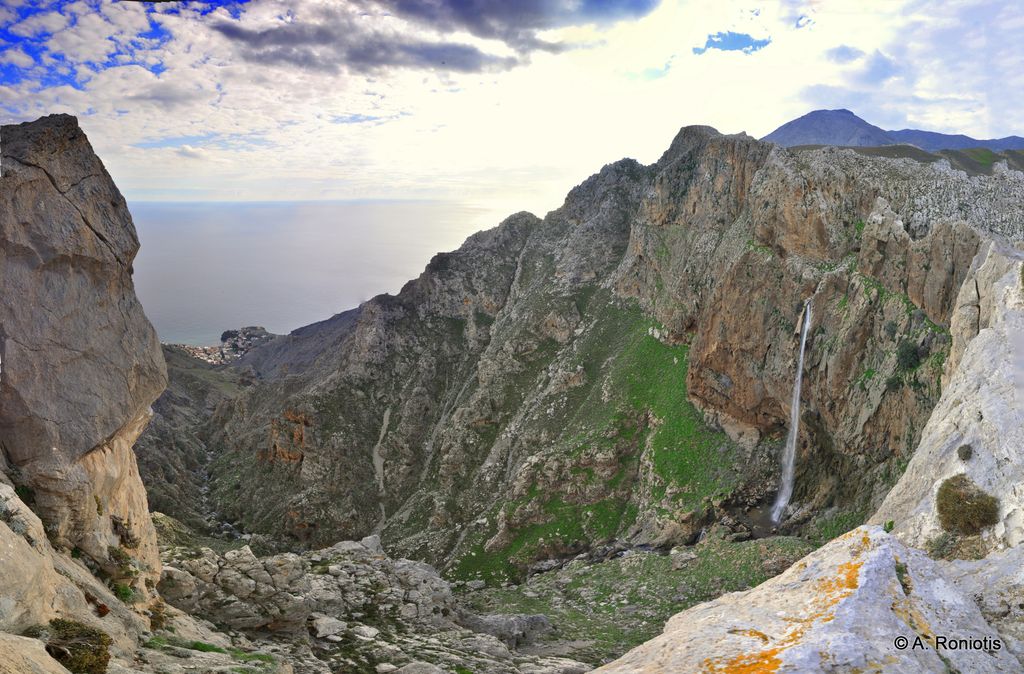
From the southern mass of the Asterousia bursts the Amba waterfall, with the scale and sense of the uncompromising; water descends through an impressive fissure with a total height approaching 140–145 metres — a steep, cinematic fall that forms small pools and successive “steps” of water beneath the rock. The gorge and the waterfall are created by the plateau’s system of springs and streams (a river/stream flowing southward) and end in the sea at the area of the Three Churches; the view from the overlooks is breathtaking — stones, sparse macchia, and the open blue of the Libyan Sea searching for depth.
- The shores of the “Ornia”
At the mouth of the gorge you will find the shores of the “Ornia” — sheer coves and pebble beaches frequented by raptors — and the mountains that embrace them. There lies the largest vulture colony in southern Europe, including the rare bearded vulture (Gypaetus barbatus). Where the mountain mass meets the sea, a mix of cliffs, small coves, caves and crystalline waters is formed — ideal for photography and silent enjoyment.
- What to do at Amba
Hiking trails start from dirt roads above the cliff; there are short as well as more demanding routes depending on level. Activities that highlight the place are hiking along the gorge, landscape photography (golden hour for striking shots), picnicking in shaded passages and — when weather permits — a short refreshing dip in the small water basins. Caution: during raptor breeding seasons (winter/early spring in some cases) access to certain areas should be undertaken with respect and care for nature.
- How to get there
The site is accessible by car from Heraklion in about 40–60 minutes, depending on the exact location and traffic. We recommend checking with Coastal Key for the most up-to-date directions, available hiking paths or local guides. The road to the waterfall is a dirt track in places — appropriate footwear and careful driving are advised.
- Best time to visit
The ideal period to visit is spring (March–May) and after rainy spells, when the water flow is more impressive and the vegetation blooms. Summer offers cooling and opportunities for refreshing breaks, but in dry periods the waterfall may run lower.
- What to bring
Comfortable hiking shoes, water, sun protection, a hat and a light layer for cooler hours. Respect the environment — do not leave litter and avoid causing damage.